Seven thousand or so miles ago, halfway to 130,000 miles,
a set of new brakes didn't seem out of the question. In fact, I thought it was downright silly that the need hadn't arisen sooner. Between pulling a trailer -- sometimes approaching 2000 pounds -- and all the other varying types of driving I do, a fresh set of brakes should've been in order a while ago.
Anyway, two months ago was the day. Bad weather was coming, and I didn't want to be laying on the garage floor when outdoor ambient temperatures sank to somewhere near my I.Q.
More than one person asked me, "Why not just take it to the dealer; pay someone to do this for you?" Its a fair question with an easy answer. I can't bear to pay someone to do something that I: a. know how to do; b. have all the required tools to complete the job. Because there are many times when I don't know how to do something, or I don't have the proper tools for the job, or both. I can't readily work on the air conditioning in my house. I don't know much about it, and I don't have many of the tools one would need to do any kind of substantive work. The same goes for... I dunno... dentistry.
I told my mother that despite what she might think, I could teach her how to replace brake pads and rotors on her car. I don't think she could care any less, and she would be firmly in the pay-someone-else-to-do-it camp. I thought I might run through some of the basics of swapping pads and rotors, at least as it relates to Subaru's superb
Legacy 2.5 GT.

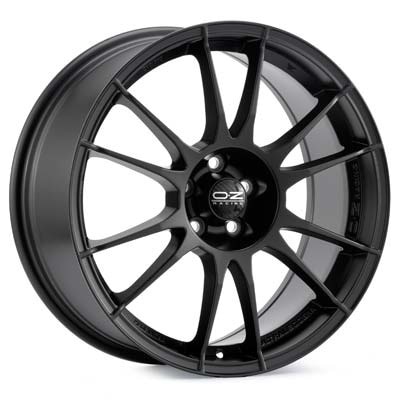
Right. So what we'll be fiddling with is inside there, inside the wheel

Certainly, we'll need a suitable floor jack to get the job started. This is a
really nice one from sears.
The Legacy GT, for whatever reason, is particularly low to the ground. A low-profile jack like the one pictured above is required. Next, we have to find a suitable jacking point -- a place where we can jack the car up without fear of damaging the car, or risking the car falling off the jack.

There are six jacking points on the Legacy GT according to the service manual. Note the use of a jack stand in addition to the jack. This one is situated at the control arm mounting bracket. After positioning the jack stand in an equally suitable location, I lowered the car onto the jack stand for stability. Because of the jack stand's footprint and relative lack of wheels, there's less chance of the car moving than if I just used the jack itself to support the weight.

Since I wanted to lift both wheels off the ground so I could later change the tire positioning front-to-back, I did the same for the rear:
Some say it's a bad idea to lift the car this way, as it puts too much torsional stress on the
unitized body. That may very well be the case.

Here, we see that the front wheel has been removed. Many people feel it necessary to use air tools when performing a job like this. It makes it faster, and sometimes easier. But with proper hand tools, it isn't at all a necessity. I didn't use an air/impact wrench on this job until it came time to put the lug nuts back on and secure the wheel. But even then, I only used it as a quick means of running the lug nuts onto the studs somewhat loosely. I set the tension of each lug nut by hand at 90 lbs-ft of torque with a torque wrench.

As an aside, if you look at the picture to the right, you'll see lots of corrosion on the hub center of this wheel. That's where the rotor and the wheel come in contact with eachother. This happens because the two metals are dissimilar. The rotor is steel, and the wheel is an aluminium alloy. Yes. Aluminium. It's the British spelling and I like it.
I like to lightly coat the wheel-side of the hub with a
non-ferrous anti-seize compound. Less is more here. If you use too much, it could sling off and coat the brake rotors. The purpose of anti-seize is to reduce friction. The underlying principle of brakes is friction. You dig?

If you've never heard of
PB B'Lasterthat's a shame. It truly is the best thing ever when it comes breaking apart things fused together by rust. This car is an '05, so it's not as bad as it could be. But still there's no shortage of rusted fasteners.
Like the anti-seize, this is designed to reduce friction greatly. Use extreme caution when working around brake pads and rotors. I'm replacing both pads and rotors here, so I don't care if they get saturated.

Here, we're looking at the cross section of the old brake pads in the pad carrier, against the rotor. One could argue that I had a bit of time left before *really* needing pads. But I wouldn't have wanted to wait any longer.

The brake pads quite essentially come right out of the carrier. Sometimes they need some persuasion with a long, flat implement and a sledgehammer.
To get the rotors off, we need to remove the caliper and brake pad carrier. This is where the PB B'Laster comes in handy.
The round, rubber accordion-looking thing there is the Constant Velocity (CV) joint boot. When these tear and go unchecked, the joint goes bad and it's generally time to buy a new axle. Quite annoying, really.
This is the caliper -- *THE* essential component of the braking system. When you step on the brake pedal, the lever attached to the pedal pushes on a rod which is connected to a piston that, in turn, pushes brake fluid through the brake lines. The terminus of this fluid is the caliper. In this case, there are two pistons that get pushed out of the caliper body and apply pressure against the brake rotors. The corroded mess you see on the left is what's left of the disintegrated brake pad anti-rattle backing material. The new pads have no such removable backing pad.
For measure, here is an old pad compared to a new pad -- a Hawk HPS performance brake pad. I'm not sure sure I'd still say that I had so much time left.

So now, onto the matter of the new rotors. Quite a difference.
Disc Brake Australia (DBA) 4000 Slotted Rotors that I sourced from
Import Image Racing.Good folks, great prices, super-fast shipping.

Upon reassembly of the whole works, the caliper pistons have to be driven back into the caliper. That's where a suitably-sized C-Clamp comes in handy. This car has two pistons per caliper in the front, so two C-Clamps are preferable, though you can make it work with just one.
And, when you install the new rotor, pad carrier and new brake pads, it looks something like this:

I've applied anti-seize to the back of both brake pads as well as the brake pad springs where the pads contact them. Just like the hub, less is more here. Additionally, these rotors are directional; there's a left and a right. This ensures maximum performance of the slots which help to keep brake pad deposits off the rotors.
The caliper in the carrier and the wheel ready to be bolted on.
The rear brakes are nearly identical to the front, except that they're smaller (most of a car's braking bias is towards the front), and in this case, the emergency brake is located
inside the center of the disc brake.

It looks largely the same; smaller pads, smaller diameter rotor. Still, quite large for a car of this size.
And really, the mechanics of freshening pads and rotors on the rear is about the same. Access to the rear, lower caliper carrier bolts is idiotically difficult.

You can't really make it out here, and I suck at Microsoft Paint (because it sucks by a factor of forty), so I can't really draw a circle around the idiocy. But suffice to say, access to the lower caliper carrier bolt is only achieved by inserting a long enough socket extension through the lower control arm opening. Because of the size of the opening, you can only fit a 3/8" drive socket in there which means leverage isn't on your side.

In this case, the rear rotors were most likely responsible for the significant pulsation felt at the brake pedal -- so much so that it made driving the car a chore. Note the deep groove on the back side of the rotor, and the pronounced heat cracks.
Also note the drum portion of the rotor. Inside there, the e-brake lives.

It seems to me that some "modern" offerings from ford, GM and Chrysler have primary rear brakes that aren't as robust as the auxiliary, parking brake found on this Subaru.

It's right about here that you'll find it necessary to extract some brake fluid from the brake master cylinder reservoir. Since we've pushed the brake caliper pistons back in, the fluid that was inside the calipers has to go somewhere. It goes backwards through the brake system. If any fluid has been added (which, it never should be -- if your fluid is low, you either have a leak, or it's time for brakes), there will be more fluid in reserve than the system can handle. It'll make a mess of things.

Old hat, new hat. Err... brake pad.

New pads in the carrier and the rotor back in place. But not really in that order. Again, note the anti-seize compound on the brake pad springs, as well as the back of the pad.
Everything working smoothly, in its right place. We like that.

And Bob's your uncle.
Still, some of the best looking brake rotors I've seen. Toilet looking calipers in this case, but the rotors sure look nice.
So how's it work, Norman?
Funny you should ask...
Well, having completed this blog entry some two months after I actually did the job, I've had ample opportunity to bed the brakes in and try them in most situations I might encounter. I haven't pulled a trailer with them yet, but if I were to extrapolate, I'd say that they'd be superb for that as well.
They're positively stunning. They offer staggering, arrest-hook performance with no noise, very little dust and progressive feel that I've never experienced before. You have to be mindful of water, however. If you're driving in heavy rain, and the brakes are soaking wet, it takes a half second or so for them to dry off and bite. The first time it happened, it was a bit disconcerting, you might say. But once you know what to expect, it's nothing.
The brake rotors generate some noise during heavy braking due to the slots. I don't mind it. It's purposeful sounding, kind of like the rattling you hear under braking on a motorcycle equipped with rotors that ride on full-floating buttons -- like those found on an SPS Ducati Superbike, or the fabulous 900 SS Final Edition
The only downside is that even with BF Goodrich's very good G-Force Sport ultra-high performance summer radial, the ferocious power of the brakes far outstrips available traction.
The Legacy GT had stunning brakes before. Now, it's an even more complete performance package.